

Glass bottle production is an indispensable part of modern manufacturing. Especially in the consumer goods, cosmetics, and food and beverage industries, glass bottles are in high demand. However, producing glass bottles is not just a matter of pouring molten glass into a mold, it is a complex process. This article will guide you through how to produce glass bottles efficiently and how technologies such as "automated glass production" are changing the traditional paradigm in this industrial sector.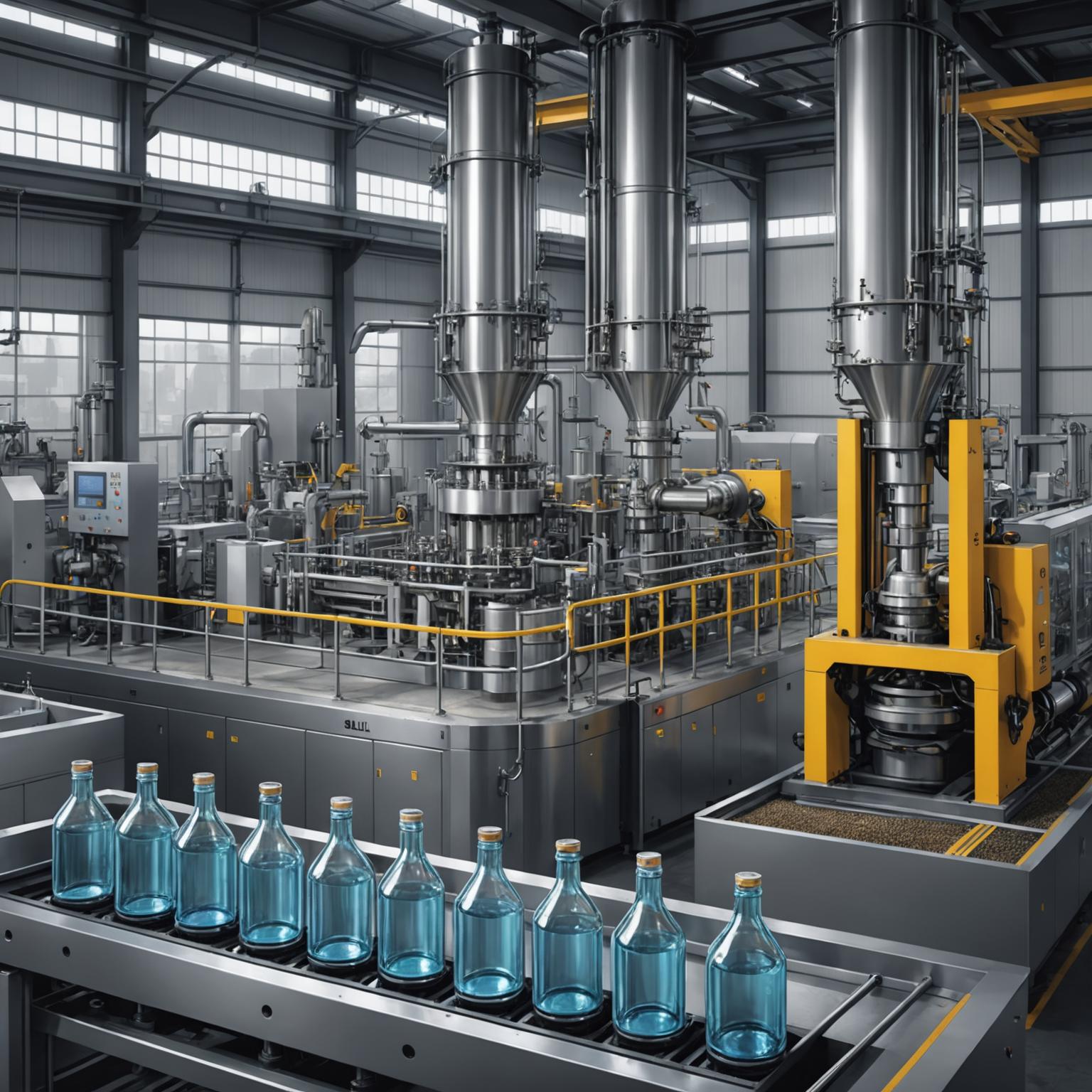
What is glass bottle production?
Glass bottle production refers to the processing of glass materials into bottles that meet the requirements of specific shapes, sizes and thicknesses through a specific process. The entire process requires both design and process development, as well as the support of high-tech equipment. In traditional production methods, the process of hand-blowing glass bottles is time-consuming and complex. Modern glass bottle production from melting to molding often incorporates automation technology to improve efficiency and quality.
The main raw material of glass bottles is silica sand (quartz sand), supplemented by sodium carbonate, limestone and other auxiliary materials, which are processed after being heated and melted. Understanding these raw materials and processes is critical to helping manufacturers create more delicate and durable glass products.
A key step in the production of glass bottles
To produce glass bottles, several links need to be precisely connected. The following are the key steps in the production of glass bottles:
1. Raw material preparation: First of all, the producer needs to mix various raw materials such as silica sand, sodium carbonate, limestone, etc., in strict proportions. This part usually requires a high-precision raw material proportioning system to ensure the stability of the chemical composition of the glass after melting.
2. Glass melting process: In a glass kiln, the mixed raw materials are heated to about 1700 degrees Celsius to turn them into liquid glass. In this process, the high temperature environment in the kiln also needs to be strictly monitored to prevent undesirable phenomena such as bubbles in the molten glass.
3. Molding process: Molding is a core part of glass bottle production. The liquid glass is fed into the mold by a robotic arm or conveyor device to form a preliminary shape. Modern technologies such as "automated glass production" are particularly important in this process. The automated production line can complete the glass forming process efficiently and accurately, and reduce human error.
4. **Annealing Treatment:** The molded glass bottles are transferred to the annealing furnace for temperature uniform degradation and stress relief. Annealing is an important process to ensure the strength and quality of glass bottles.
5. **Quality Inspection & Packaging:** Finally, the produced glass bottles will go through strict testing processes, such as visual inspection, dimensional measurement and compressive strength test. Qualified products will be packaged and shipped to customers.
Advantages of automated glass bottle production
Automation technology is changing the way the glass bottle production industry operates. With "automated glass production", manufacturers are able to reduce production costs and improve product quality.
- **Improve efficiency:** The automation equipment can run continuously for 24 hours, so that the efficiency of the production line can be maximized. Compared to manual operation, automated production lines are able to process more glass bottles and reduce production cycles.
- Waste reduction: Automation technology allows for more precise control of raw material usage, while accurately monitoring the production process and reducing scrap rates.
- **Improved Quality:** Modern equipment with high-precision molds can produce more uniform and consistent glass bottles. This is especially important for the food and beverage industry to ensure that glass bottles are tightly sealed and aesthetically pleasing.
- Reduced labor costs: Automated equipment reduces the need for workers, resulting in a significant reduction in labor costs. In addition, because modern production lines are easy to monitor, factories can also concentrate on training skilled equipment operators.
Environmental issues in the production of glass bottles
Although glass bottles are more environmentally friendly than plastic bottles, the production process still generates energy consumption and exhaust gases. Here are some of the environmental improvements:
1. Harnessing clean energy: Producers can use natural gas or electricity instead of coal to power their glass furnaces to reduce carbon emissions.
2. Recycling: A large amount of waste glass can be reused and melted into new glass, reducing the need for raw materials.
3. Improved annealing process: Optimizing energy usage during the annealing process can significantly improve the energy efficiency ratio of the entire production line.
The future: smarter glass bottle production
With the development of technology, the field of glass bottle production is moving towards intelligence and digitalization. Internet of Things (IoT) and artificial intelligence (AI) technologies will further optimize production processes. For example, with real-time data analysis, producers can identify and resolve bottlenecks and achieve trouble-free production.
In addition, 3D printing technology has also begun to enter this field. Some businesses are already experimenting with using 3D printing technology to design unique prototypes and molds for glass bottles. This approach not only speeds up product development, but also provides customers with more customized solutions.
summary
Glass bottle production is a complex process that combines advanced technology and high-end processes. By adopting modern, automated and environmentally friendly technologies, manufacturers can produce glass bottles that are more efficient and of high quality. This not only meets the market demand, but also opens up a new direction for the development of the industry. With the further promotion of technologies such as "automated glass production", the future of glass bottle production is full of potential for innovation. Hopefully, this article will provide you with useful knowledge in the field and help you gain a deeper understanding of the processes and trends.